You leave the doctor’s clinic knowing what needs to happen next: get the tests done, collect the reports, and return for a review. It sounds straightforward.
Then the practical questions begin. Which diagnostic centre should you contact? Has the report arrived? Did it reach the doctor? Who should you call when something is unclear?
For the person managing their own health, or looking after a parent, these small tasks can take over the day. There may be good doctors and capable diagnostic teams involved, yet someone still has to connect all the pieces. Often, that someone is the patient.
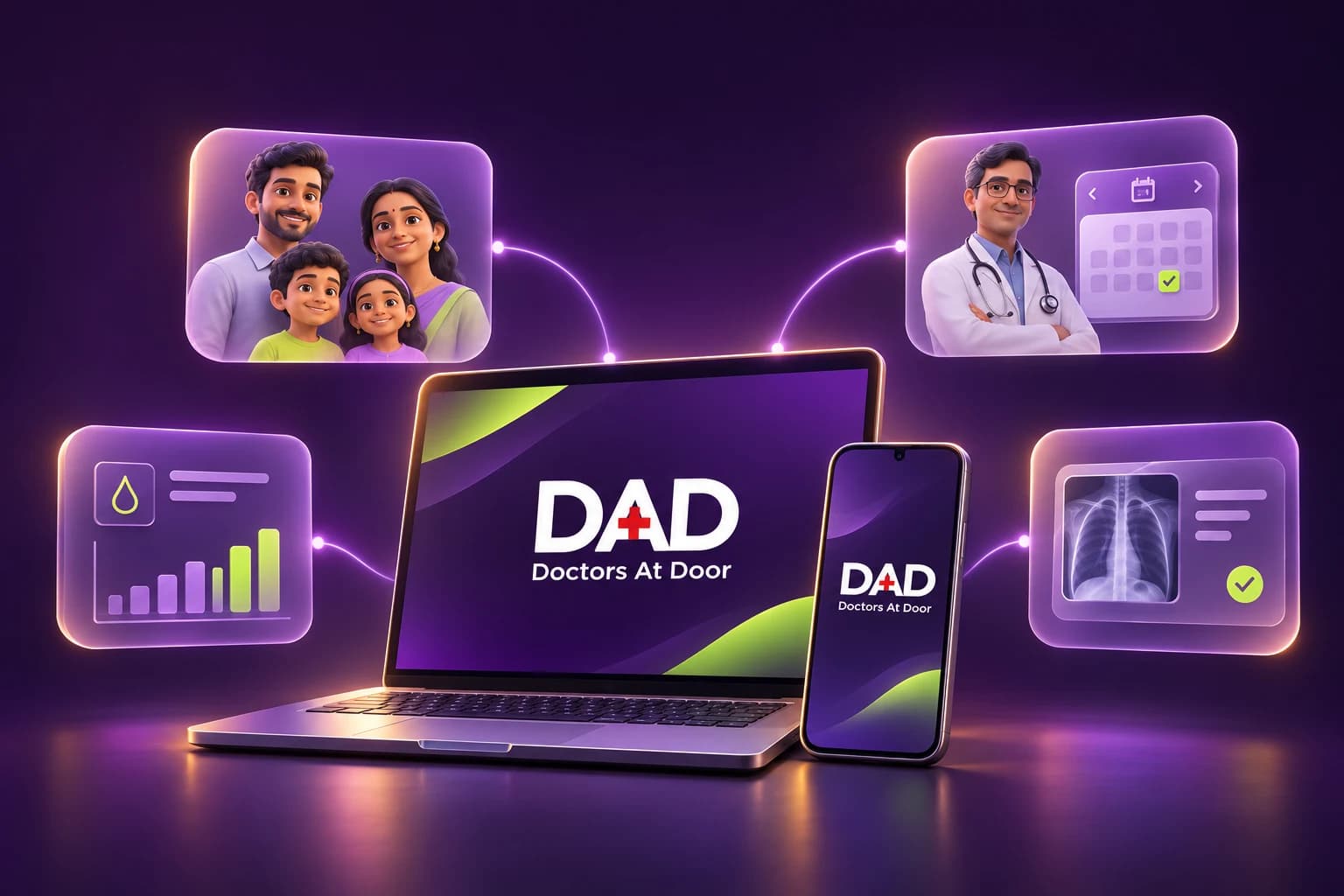
Doctors At Door, or DAD, is being built around this overlooked part of healthcare. Our aim is to bring patients, doctors, healthcare providers, and support teams into a connected ecosystem, so the experience between services receives as much thought as the services themselves.
It is an ambitious direction, but the starting point is ordinary: fewer loose ends, clearer communication, and less effort spent figuring out what happens next.
An ecosystem, in everyday terms
An ecosystem is a group of people and services that work in relation to one another. In healthcare, that includes the patient, the doctor, the clinic, the diagnostic centre, the laboratory, and the teams handling the practical work around them.
DAD’s wider vision also brings pharmacies, delivery partners, hospitals, and wellness professionals into that picture. These are parts of a long-term direction, not a claim that every service is already available.
What matters is how those parts connect. A directory can help you find a provider. A booking tool can help you arrange a visit. Both can be useful, but neither necessarily answers the question that comes afterwards: how does the rest of my care move forward?
DAD is being designed to support that continuity. The idea is for people, information, and responsibilities to stay connected as a healthcare need moves from one stage to another.
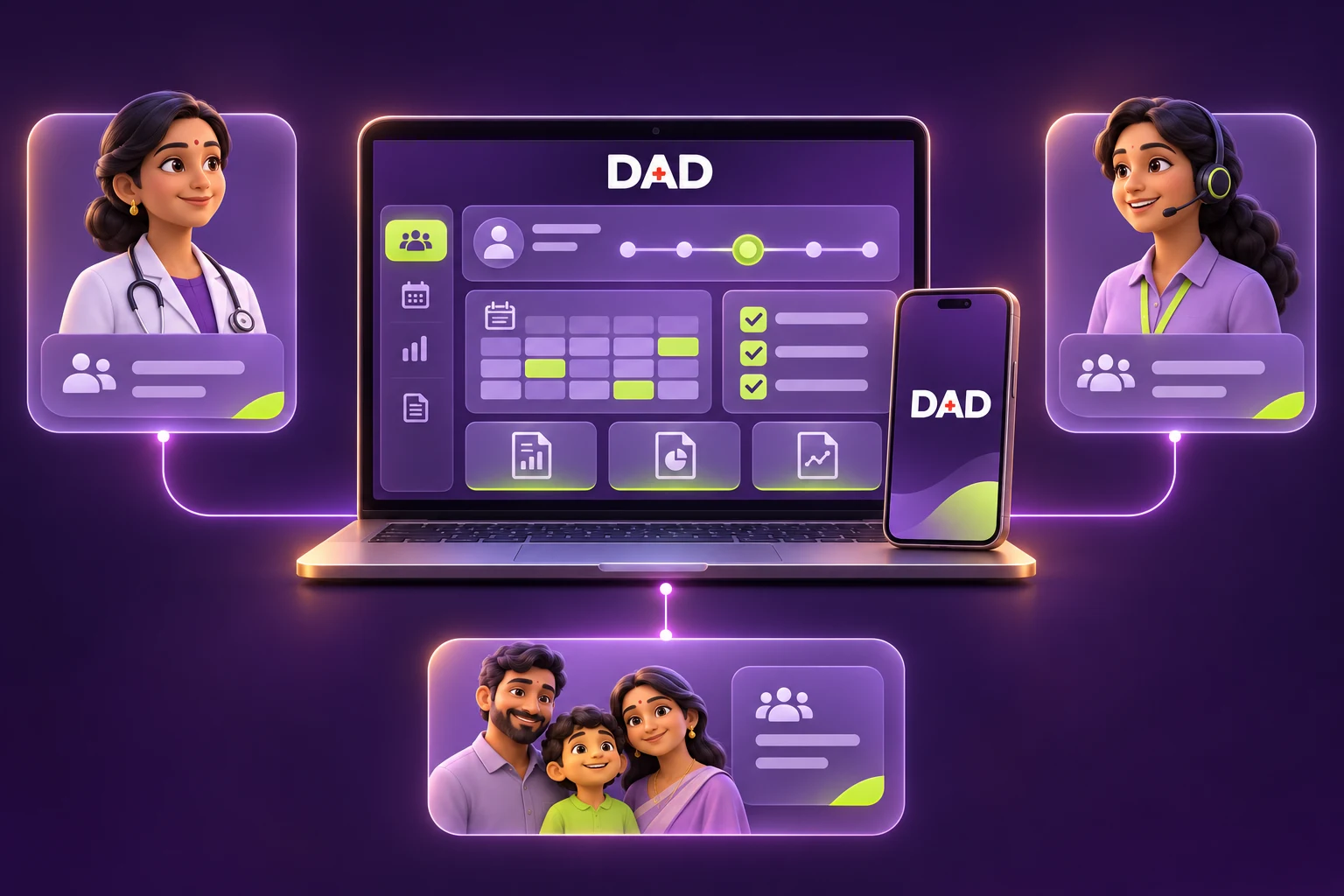
This does not mean giving everyone the same app or the same access. Patients, doctors, and operational teams have different needs. The ecosystem is being structured around those differences, with experiences suited to each role.
From a patient’s point of view, that complexity should stay in the background. You should not need to understand how a diagnostic centre is organised to know where your report is or whom to contact.
DAD is not being built to replace your doctor or turn healthcare into a purely online experience. Care still happens in consultation rooms, diagnostic centres, laboratories, and homes. The platform’s job is to support the connections between those places, with the practical realities of each setting kept in view.
Less organising. More clarity.
Consider a working professional arranging tests for an elderly parent. The difficult part may not be finding a diagnostic centre. It may be fitting the test around work, keeping track of updates, and ensuring the result is available for the next discussion with the doctor.
Every unclear handover adds another task. Someone makes another call. Someone repeats the same details. A family member checks a message thread, then checks it again. These moments rarely appear in a description of a healthcare service, but they shape how the experience feels.
For DAD, convenience means paying attention to them. We are working towards an experience where patients have a clearer sense of the next step and where coordination does not depend entirely on their persistence.
That matters even when nothing urgent is happening. Routine care still asks for time, attention, and organisation. A system that respects those demands can make healthcare feel less consuming.
Good coordination also means being honest about what happens next. A patient may be willing to wait for a report; being unsure whether to call, return to the centre, or simply wait is a different kind of frustration. Clear expectations deserve a place in the experience.
We also recognise that the person managing the process is not always the person receiving care. It may be a daughter, a spouse, or a son living in another city. Thinking about families changes the questions we ask: is the process understandable, is support easy to reach, and does the person responsible know what to do next?
The details matter when someone else is depending on you.
A system that works for doctors, too
Patients experience the gaps between services. Doctors and their teams deal with those gaps from the other side.
A missing report, an unresolved query, or a follow-up that needs organising can create work that sits outside the consultation itself. Clinical care depends on the doctor’s expertise, but the surrounding process also needs attention.
That is why doctors are central to the DAD ecosystem, rather than simply appearing as names on a list. The platform is being designed to give doctors a more coordinated working environment, supported by people who can handle appropriate operational responsibilities. Diagnostic coordination, patient communication, and administrative follow-through should have a place in the system instead of becoming scattered tasks.
This distinction matters. Support teams can help move a process forward; they do not take over medical decisions. Technology should help the people providing care without blurring their responsibilities.
The same thinking extends to clinics, diagnostic centres, and laboratories. A service cannot feel organised to a patient if the team behind it is working without clear handovers or ownership.
Building for both sides means asking two questions together: does this make the patient’s experience clearer, and does it help the healthcare team do its work properly?
A feature that looks impressive on a screen but adds confusion at the desk has missed the point.
The people behind the platform
Healthcare does not always follow a neat sequence. People need explanations. Plans change. A request can fall outside the options on a screen. DAD’s approach includes human-assisted coordination because a digital interface cannot account for every situation.
The aim is not to turn every healthcare interaction into another call to a support desk. It is to make room for assistance when it is useful, with a clearer understanding of who is responsible for the next step.
Behind that experience is operational work: helping people navigate a process, coordinating with the relevant team, and following through when something needs attention.
Patients may never see most of this work. They will notice whether they have to explain the same issue three times.
This is also why connected healthcare needs boundaries. Different participants need access suited to their responsibilities; being part of one ecosystem should not mean everyone sees everything. DAD’s role-based structure reflects that distinction.
For us, thoughtful technology is not necessarily the technology a person notices most. It may be the part that removes an unnecessary step or makes an update easier to understand.
Someone who feels unsure should be able to ask a simple question without having to understand the technology before they can get help.
Why we are starting with diagnostics
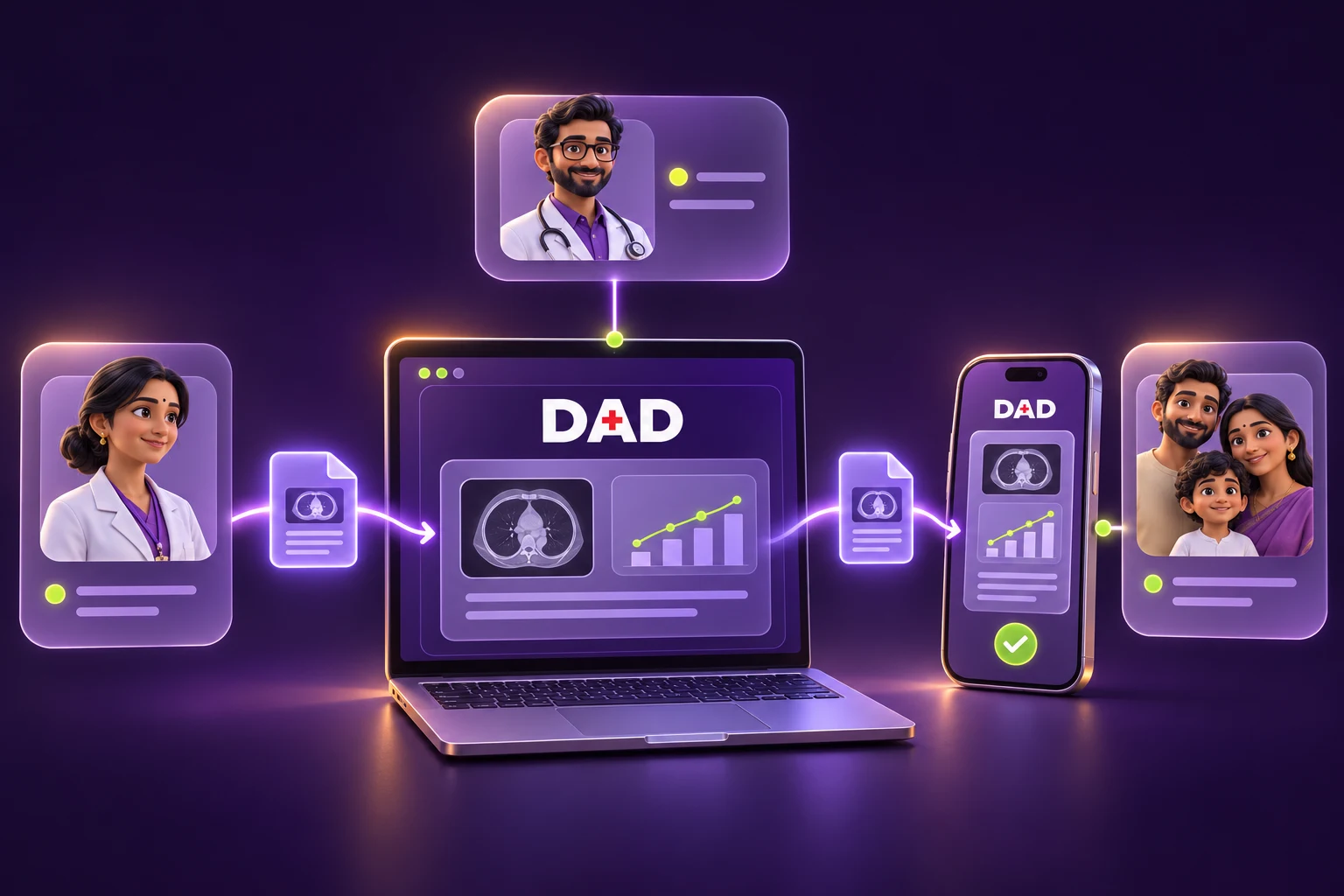
A broad vision needs a focused beginning. For DAD, that beginning is diagnostics, with the first operational testing phase centred on Kanpur.
The initial scope brings users, doctors, and administrative support into diagnostic-related workflows. It is deliberately narrower than the complete ecosystem we intend to build.
Diagnostics is a meaningful place to begin because it connects several parts of a healthcare journey. A doctor advises a test. A diagnostic team carries out its role. A report then needs to become part of the next conversation about care. There are handovers at each stage, and each handover gives us something specific to understand and improve.
Starting in one city also keeps the work close to the people using it. A workflow that seems simple on paper may raise different questions at a clinic desk or in a patient’s home. We want those questions to shape the system.
The purpose of this first phase is to learn how coordination works in everyday conditions, rather than introduce every possible service at once.
Growing responsibly means knowing what is working, where people still need help, and what must be improved before the scope becomes wider. We would rather build a useful foundation than ask people to navigate a large collection of disconnected features.
Where DAD Reports fits in
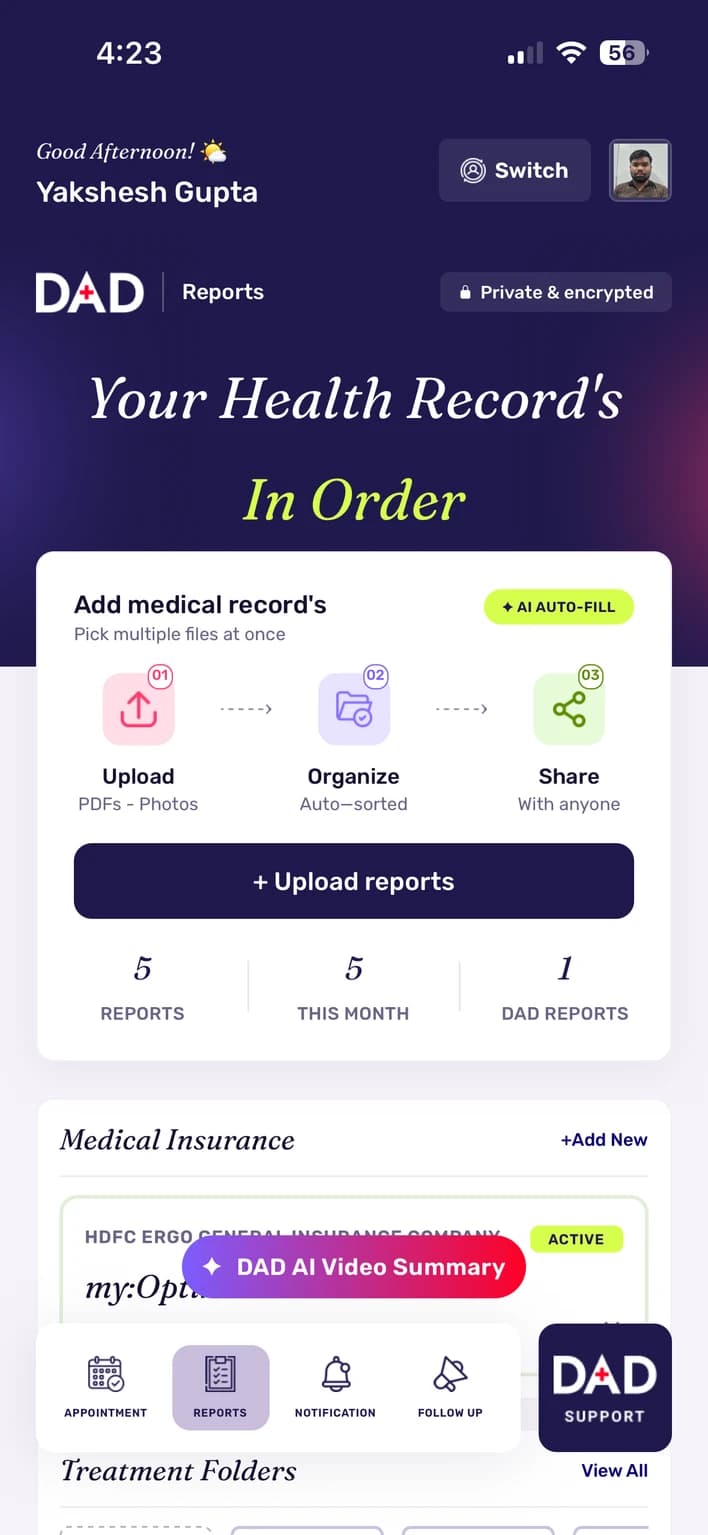
DAD Reports is our first public app and an early introduction to the larger Doctors At Door vision.
Rather than trying to present the entire ecosystem in one launch, we are beginning with a focused part of the diagnostic journey.
A report is more than a document to be collected. For the person waiting for it, it is often the link between a test and the next conversation with their doctor. That makes the experience around reports a natural starting point for better coordination.
The intention is to make the experience around diagnostic reports easier to navigate and more closely connected to the people involved in care. People should not need to understand the entire platform to see its value.
DAD Reports is one part of that work. The wider ecosystem will extend beyond this first app, with each stage introduced in time.
As the ecosystem develops, the principle remains the same. Each product should address a clear need while contributing to a more connected whole. The larger vision should make that first experience more useful, not more complicated.
The bigger picture, built in stages
Over time, the DAD vision reaches beyond diagnostics to the wider relationships between healthcare, medicines, delivery, and wellness.
The intention is not to place unrelated services under a shared logo. It is to build connections that make sense in a person’s life. Healthcare needs do not always end when an appointment finishes, and longer-term wellbeing brings its own need for guidance and support.
That broader direction will take shape in phases. Services, locations, and capabilities will depend on what has actually been developed and introduced. The ecosystem vision should never be confused with a promise that everything is available today.
For patients, the test will be practical: does the experience require less chasing and make the next step clearer? For doctors and partners, it will be whether the system supports the real work happening around care.
Those questions give us a better measure of progress than the number of features we can announce.
Doctors At Door is being built for a healthcare experience that feels considered from beginning to end. The consultation matters. So does the time spent arranging what comes before it and following through on what comes after.
We are starting with diagnostics, taking the first public step through DAD Reports, and building towards something broader.
When you are looking after your health, or someone you love, you already have enough to think about.
Keeping the process together should not become yet another responsibility you have to carry alone.